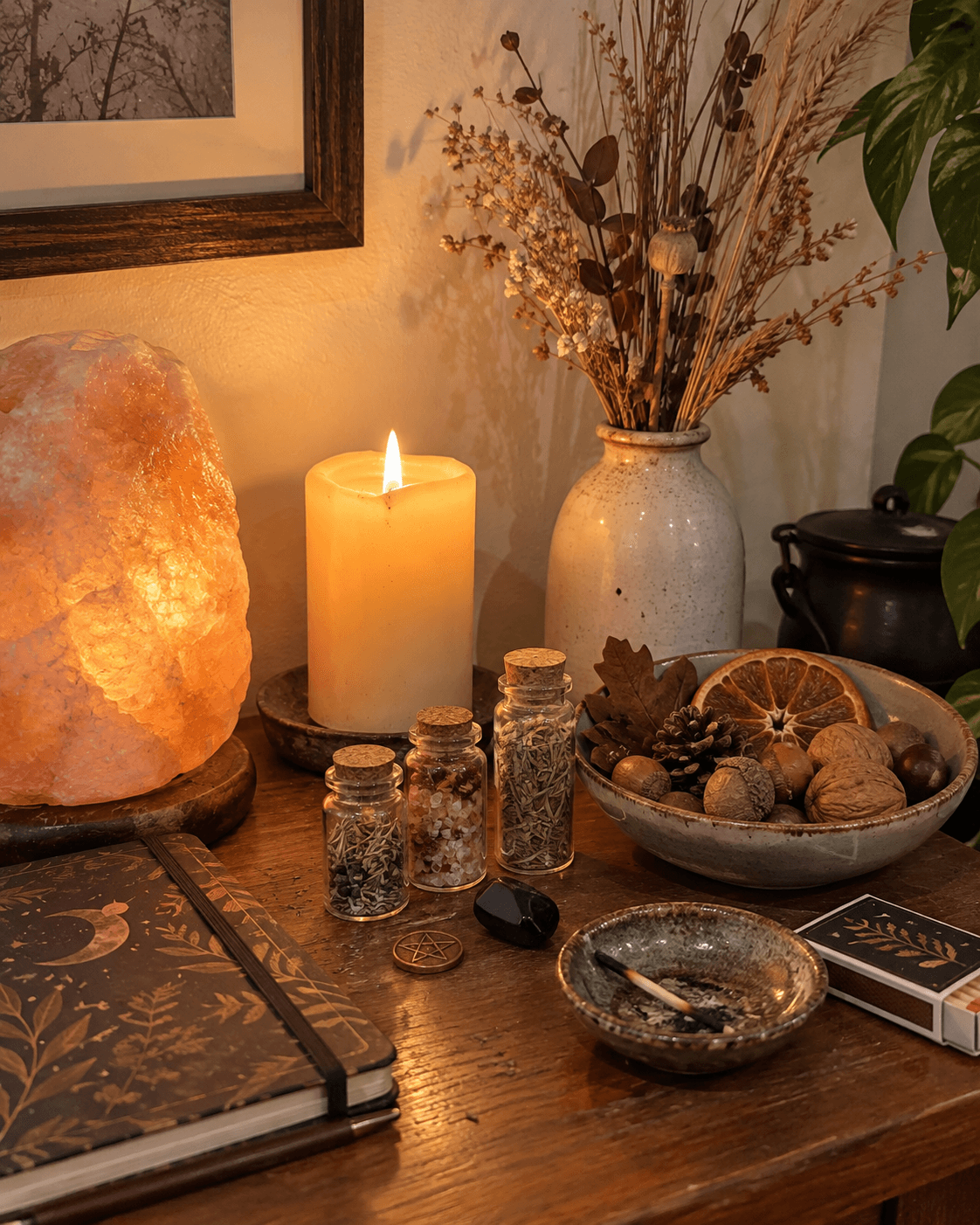
What is Samhain?
Samhain is a Gaelic seasonal festival associated with the end of harvest and the beginning of the darker half of the year. It is commonly observed from the evening of 31 October into 1 November, although modern practice varies. The name is often pronounced roughly “sow-in”.
Old and contemporary Celtic Samhain rituals are not one fixed ceremony. Customs differ by place, family and spiritual path, but recurring themes include fire, feasting, protection, divination and remembrance of the dead. Many modern Pagan Samhain rituals describe the veil between worlds as thin—a poetic and spiritual way of naming a season when memory, ancestry and the unseen feel especially close.
You do not need elaborate tools or certainty about the supernatural to take part. Samhain rituals at home can be quiet, intimate acts of remembrance and seasonal reflection.
Tradition made practical
Samhain rituals and traditions
Traditional themes can be adapted respectfully to the needs of a modern household. Choose one or two practices and give them your full attention.
Light an ancestor candle
Choose a candle in a safe holder and speak the names of those you wish to remember. Let the light represent welcome, memory and the life that continues through you.
Create a Samhain altar
Gather photographs, apples, autumn leaves, a bowl of water and a small offering. Keep it simple enough that every object carries meaning.
Write and release
Write what you are ready to lay down before winter. Tear the paper, compost it or safely burn it in a suitable fireproof vessel.
Share a remembrance meal
Prepare seasonal food and set aside a symbolic portion for loved ones who have died. Eat slowly and leave room for stories and silence.
Try gentle divination
Pull one tarot card, scry into a dark bowl of water or reflect on an apple cut across the middle. Ask for useful insight rather than fixed prediction.
Cleanse and protect the home
Open a window, sweep towards the door, use sound or a smoke-free cleansing method, then refresh the protection at your threshold.
Memory and welcome
Samhain altar ideas
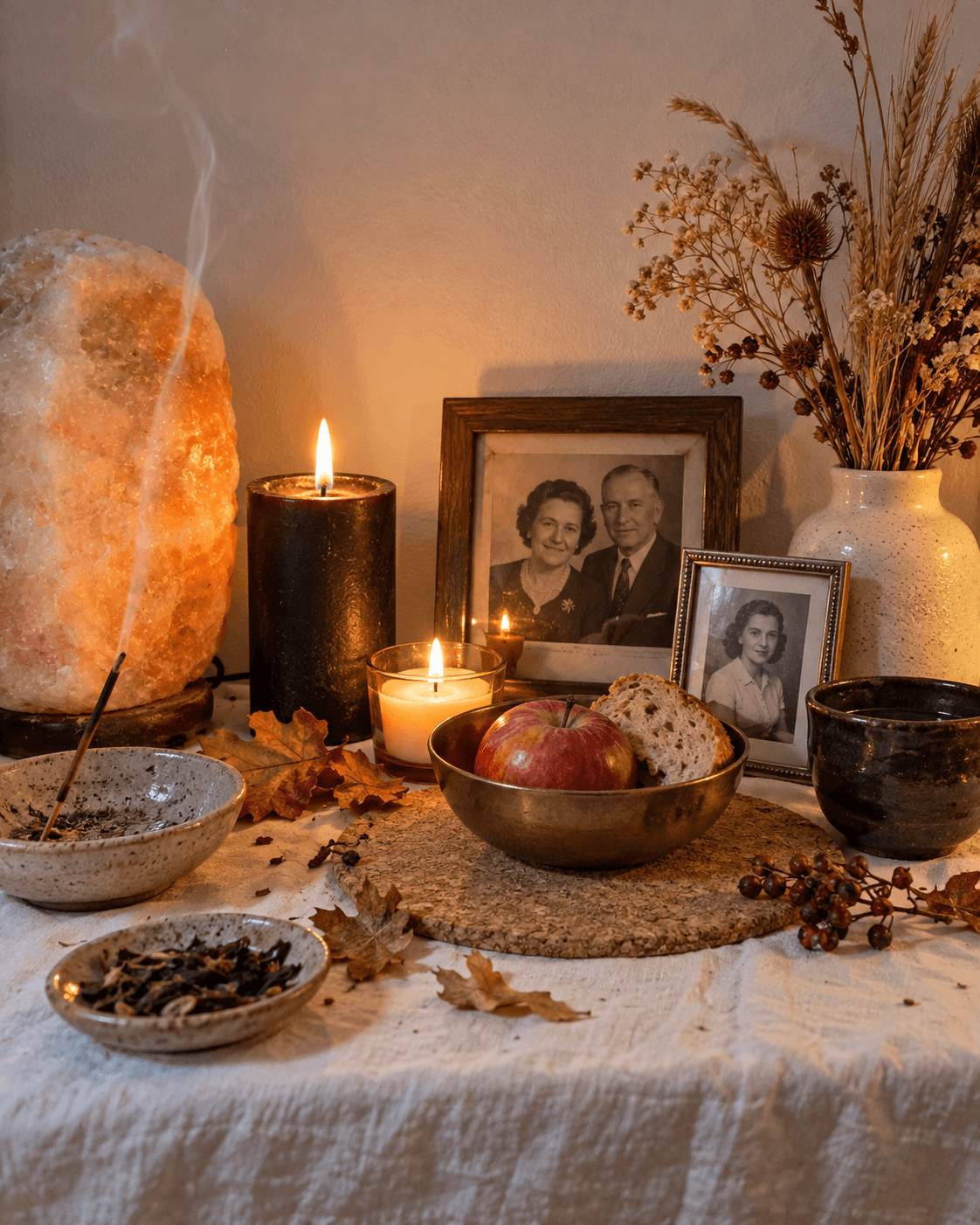
A Samhain altar is a place to gather the season's meaning. It may honour family ancestors, chosen ancestors, beloved animals, a former home or the parts of your own life that have ended.
- Candles in secure holders
- Apples, bread or seasonal food
- Photographs or written names
- Autumn leaves and seed heads
- Rosemary, mugwort or local herbs
- A bowl of fresh water
- A family object or heirloom
- A small dish for offerings
Keep dried plants, paper and cloth well away from flames. Battery candles are a good choice where pets, children or limited space make open flame unsuitable.
Dumb supper and Samhain offerings
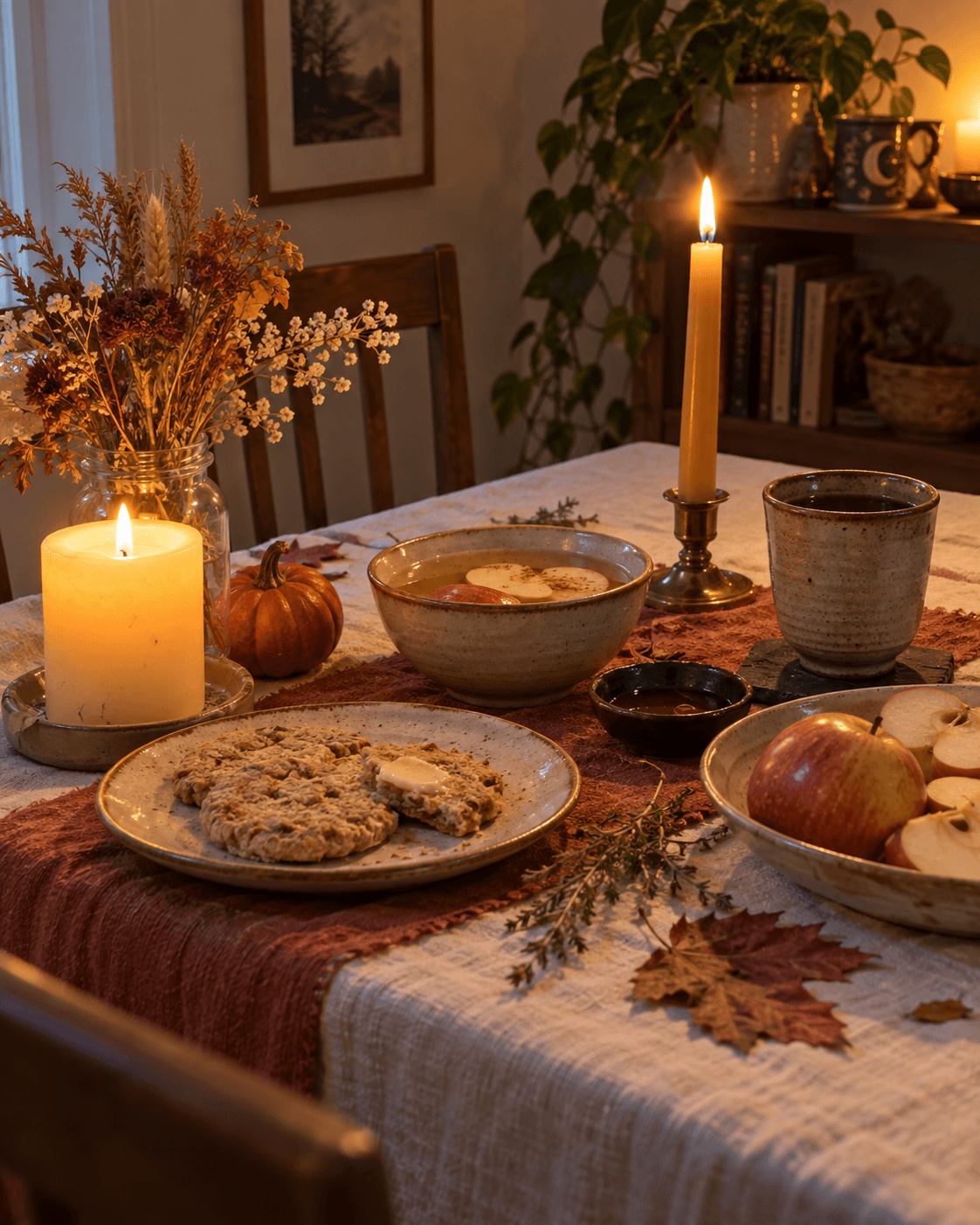
A dumb supper is a remembrance meal eaten in silence, traditionally with a place or portion set for the dead. “Dumb” here carries its older meaning of silent. A modern observance can be gentler: set aside a little food, light a candle, speak a name and share a memory before eating.
Apples, bread, oatcakes, seasonal vegetables, cider, tea or a family recipe all make suitable offerings. The value lies in connection, not expense. Remove perishable food after the observance; compost it where suitable or dispose of it respectfully rather than leaving food outdoors where it may harm wildlife.
A quiet rite for one or a household
A beginner Samhain ritual
This simple structure works well for solitary Samhain rituals and can also be shared around a family table. Allow twenty to thirty minutes without rushing.
- 1
Prepare
Tidy a small surface and gather a candle, an apple or bread, a bowl of water, paper and a pen. Place the candle in a stable holder away from dried leaves, fabric and other decorations.
- 2
Open the space
Dim the room, take three slow breaths and light the candle. Say: ‘At the turning of the season, I make space for memory, wisdom and peaceful release.’
- 3
Honour
Name the people, ancestors, places or older versions of yourself you wish to honour. Place the food and water on the altar as symbols of welcome and gratitude.
- 4
Release
Write one thing you are ready to stop carrying. Fold the paper away from you three times, then tear it. Dispose of it after the ritual in the way that feels most fitting.
- 5
Listen
Sit quietly for a few minutes. Notice memories, feelings and thoughts without forcing a sign. If you wish, draw one card or write a short journal response.
- 6
Close
Thank those you remembered, remove the offering when you are ready and extinguish the candle. Finish with food, water and one practical act that supports the boundary or intention you named.
Journal prompts for Samhain
- What am I ready to release?
- Who or what do I honour this season?
- What wisdom has this year brought me?
- Which memory deserves to be carried forward?
- What protection do I call in for the darker half of the year?
Close with protection
After remembrance and divination, return attention to the home and body. Extinguish candles, clear food safely, wash your hands, drink water and refresh the threshold. Our protection and warding guide offers a fuller routine, or make a protection spell jar for the season ahead.
Divination at the threshold
A simple Samhain tarot spread
Samhain tarot is often used for reflection on endings, inherited wisdom and the season ahead. Shuffle slowly, draw four cards and place them in a line. The spread does not require spirit contact; it can simply help you listen to memory, intuition and the changes already taking shape.
Card 1
What is ready to end?
A pattern, obligation or old identity that no longer needs your energy.
Card 2
What wisdom travels with me?
A lesson, strength or ancestral influence worth carrying forward.
Card 3
What needs protection?
The boundary, relationship, home or inner resource that deserves care.
Card 4
What guides me through the darker season?
A quality or practical action to return to during the months ahead.
Samhain ritual questions
When is Samhain celebrated?
Many people observe Samhain from sunset on 31 October into 1 November, while others follow local seasonal signs or choose a nearby evening that suits their household and practice.
How can a beginner celebrate Samhain?
Light a candle, place an apple or cup of water on a small altar, remember someone who has died and write about what you are ready to release. A quiet, sincere observance is enough.
Can I perform a solitary Samhain ritual?
Yes. Solitary Samhain rituals can be as meaningful as group celebrations. Keep the structure simple: prepare, honour, reflect, release and close.
What goes on a Samhain altar?
Common choices include candles, photographs, apples, bread, water, autumn leaves, rosemary, mugwort and small personal objects connected with those being remembered.
What is a dumb supper?
A dumb supper is a remembrance meal traditionally eaten in silence, often with a place or portion set for the dead. Modern practitioners adapt it gently to suit their families and beliefs.
Do I need to contact spirits at Samhain?
No. Honouring ancestors at Samhain can simply mean remembering their lives, cooking a family recipe, tending a grave or expressing gratitude. Spirit communication is optional.
Continue your practice
Deepen your practice with Brigid's Flame grimoires
Explore practical protection, cleansing and seasonal spellcraft with guided rituals you can return to throughout the year.
Related guides
Related practice
Home Cleansing & Protection
Prepare the home and refresh its boundaries for the darker season.
Related practice
Protection Spell Jar
Make a simple household ward with salt, garlic, rosemary and white wax.
Related practice
Tea Leaf Symbols
Explore a quiet divination practice for seasonal reflection.